How a Wearables Innovator Predicted Slips Before They Happened
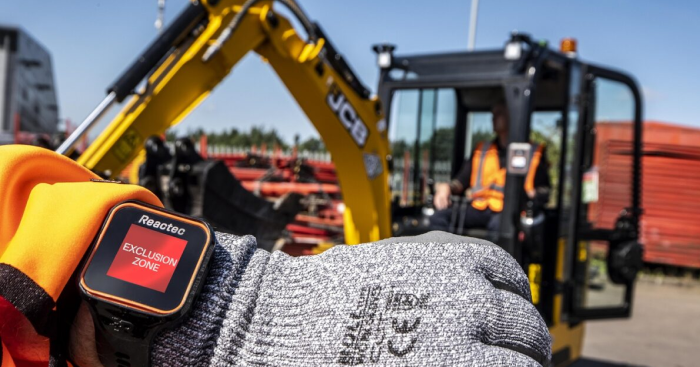
Our client builds AI-powered wearables, including a smart watch designed to protect workers in high-risk environments. At a major manufacturing facility, slips and trips kept happening, and conventional safety measures could only respond after the event. OnPoint Insights built the data pipeline and the AI model behind the watch, turning a continuous stream of biometric signals into warnings a supervisor can act on before someone falls.
Risk patterns before the incident
The model detects fluctuations in biometric signals that precede a slip or trip, so a supervisor can intervene rather than investigate.
4 biometric signals, continuously
Temperature, electrodermal activity, accelerometer movement and blood volume pulse, streamed from the watch instead of sampled after the fact.
Real-time at shop floor scale
Parallel and distributed processing keeps continuous data from an entire workforce analysable in real time without the compute cost running away.
The problem
Safety measures that could only react
Conventional workplace safety works backwards. An incident happens, it gets investigated, a control gets added. That cycle improves next year and does nothing for the person who fell this morning. Slips and trips are the hardest category to design out, because the conditions that cause one are momentary and specific to the person.
At the manufacturing facility, recurring incidents were driving injury rates, absenteeism and healthcare costs, and disrupting production. Our client’s watch could capture physiological data continuously, but continuous data from an entire workforce is a scale problem before it is an insight problem, and nobody had turned those signals into a prediction.
What was getting in the way
- Recurring safety incidents led to higher injury rates, absenteeism and healthcare costs.
- Incidents disrupted production workflows and affected morale on the floor.
- Existing safety measures had no real-time monitoring or predictive capability, so prevention was not possible.
- There was no scalable way to manage, process and analyse continuous health data coming off the devices.
Our approach
From biometric signals to a warning someone can act on
What we found
A smart watch produces a continuous stream of signals, and almost none of it means anything on its own. The work was in identifying which fluctuations consistently come before a fall, which is a modelling and signal preparation problem long before it is a dashboard.
What we did
Four signals off the device. Temperature, electrodermal activity (EDA), accelerometer movement and blood volume pulse (BVP), captured continuously from the smart watch.
A pipeline built for continuous data. Data collected securely into Amazon S3 in Avro format, chosen for efficient storage at the volumes that continuous monitoring produces.
A model trained on what precedes a fall. The AI model detects biometric fluctuation patterns that come before slip and trip events, with upsampling, downsampling and feature engineering applied to prepare the signal for training.
Processing that keeps up and stays affordable. Parallel and distributed computing strategies deliver real-time analysis without compute costs scaling with the workforce.
The choice we made
We spent the effort on preparing the signal rather than on a larger model. Upsampling, downsampling and feature engineering are unglamorous work, and with physiological data they decide whether a model finds a real precursor or learns noise. A safety alert that cries wolf is ignored within a week, and at that point the system is worse than having none.
-
 Amazon S3
The results
What changed on the floor
Safety moved from documenting what went wrong to acting before it did.
Supervisors get a warning, not a report
Early alerts let a supervisor step in while the risk is still building, which is the difference between prevention and an incident log.
Fewer slips and trips on the floor
The client reports a reduction in slip and trip incidents after wearable monitoring was introduced at the facility.
Safety design backed by evidence
Historical trend analysis feeds long-term safety protocols and workplace layout decisions, so the environment itself improves rather than only the alerting.
Facing a similar challenge?
Talk to our data and AI team about where you are today and what good looks like. 30 minutes, no obligation.
Book a consultation
More Case Studies
Next Case Study
How an Industrial Manufacturer Moved From Reactive to Predictive Maintenance
How a Database Audit Fixed a Healthcare Platform Serving 400+ Cities