How an HVACR Retailer Rebuilt Product Recommendations with Machine Learning
A growing e-commerce retailer in the HVACR industry was running a recommendation engine that was not earning its place. Suggestions missed what customers were looking for, personalisation was limited, and complementary products rarely surfaced. OnPoint Insights rebuilt the engine on machine learning, benchmarked it against a popularity baseline, and embedded it across product pages, search and checkout.
Live across the journey
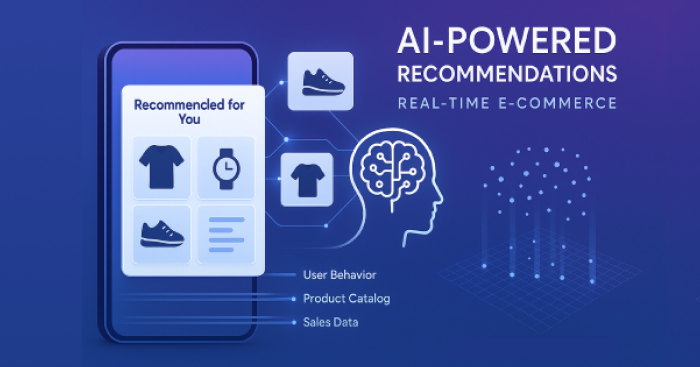
Recommendations appear on product pages, in search results and at checkout, at the point where a customer decides.
Measured, not assumed
Every version was A/B tested against a popularity baseline for engagement, cart completion and revenue impact.
Cross-sell has a route again
Complementary products surface across product pages, search and checkout, which is where the revenue opportunity was being lost before.
The problem
The recommendations were there. The relevance was not.
On an e-commerce site, a recommendation that misses is worse than no recommendation at all. It occupies the space where a relevant product would have been, and it teaches the customer to ignore that part of the page entirely.
Our client sells HVACR products online to a technical audience that knows exactly what fits what. Their existing recommendation engine was not meeting that bar, which cost them both engagement and the cross-sell revenue that should follow a confident recommendation.
What was getting in the way
- Suggestions were often irrelevant to what the customer was actually looking for, which weakened engagement across the shopping experience.
- The system could not tailor recommendations to user behavior, purchase patterns or the relationships between products.
- Complementary products were not being surfaced, so cross-sell and upsell opportunities were lost at exactly the moment they were available.
Our approach
Prove the model beats the obvious answer
What we found
Recommendation projects fail quietly. A model that performs worse than simply showing popular products still looks like it is working, because something is always on the page. So the first thing we built was not the model. It was the benchmark it had to beat.
What we did
The data behind the behaviour. Behavioural, transactional and product attribute data were aggregated, cleaned and structured, with missing values and outliers handled, so the model trains on something reliable.
A baseline before a model. A simple popularity-based model set the benchmark that every later version had to beat, which is how you tell a working engine from a busy one.
Matrix factorisation for the real relationships. Alternating Least Squares surfaces latent user-item relationships, so recommendations rest on how products actually relate in customer behaviour rather than on category tags.
Live where customers decide. The engine is embedded in the platform, serving dynamic recommendations across product pages, search results and checkout flows.
The choice we made
We benchmarked against a popularity model and A/B tested every change, measuring engagement, cart completion and revenue impact. That is slower than shipping a model and declaring it a success, and it is the only way to know a recommendation engine is adding value rather than occupying space on the page.
-
 Azure SQL Database
-
 Microsoft Azure
-
 Jupyter
-
 Python
The results
What changed for the retailer
The recommendation panel stopped being decoration and started doing a job on the page.
Recommendations customers actually use
Suggestions now reflect behaviour, purchase patterns and genuine product relationships, so the space given to recommendations earns its place on the page.
Cross-sell and upsell have a route again
Complementary products surface across product pages, search and checkout, which is exactly where the revenue opportunity was being lost before.
Every change is measured
A/B testing against the popularity baseline shows what each version does to engagement, cart completion and revenue, so improvements are demonstrated rather than assumed.
Delivered by a Microsoft Solutions Partner for Data & AI
Facing a similar challenge?
Talk to our data and AI team about where you are today and what good looks like. 30 minutes, no obligation.
Book a consultation
More Case Studies
Next Case Study
How a Preventive Healthcare Provider Turned Diagnostic Data into Early Warnings

How a Climate Technology Organisation Tracked Carbon Removal in Real Time